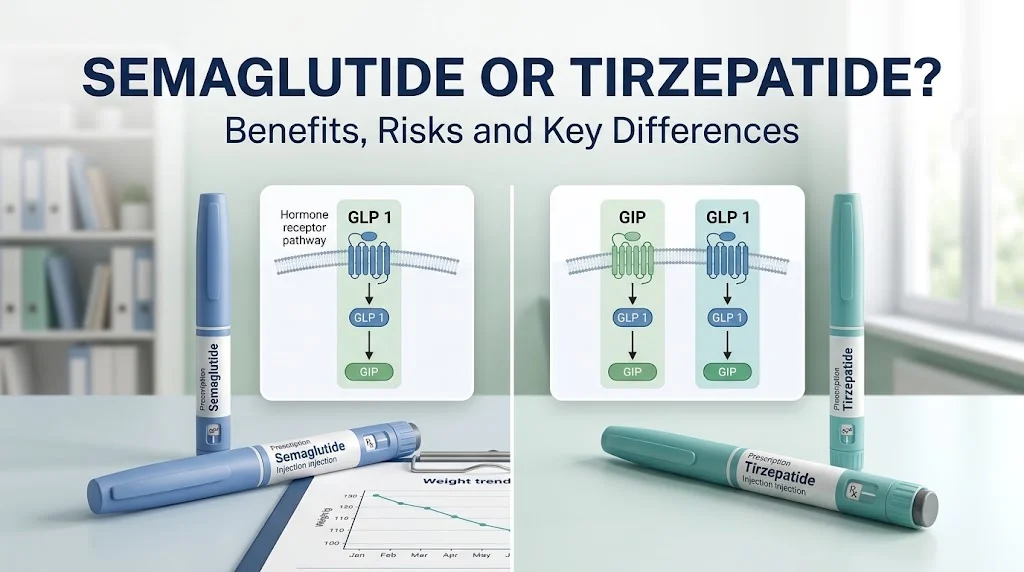
Semaglutide or tirzepatide may be considered for type 2 diabetes management or chronic weight management, but they are different prescription medicines. Semaglutide acts on GLP 1 receptors, while tirzepatide activates both GIP and GLP 1 receptors. Their effectiveness, approved uses, side effects, and suitability vary, so choosing between them requires an individualized medical assessment.
Choosing between semaglutide or tirzepatide can feel confusing because both medicines can improve blood sugar control and support weight loss, yet they work differently and aren’t suitable for everyone. Semaglutide is a GLP 1 receptor agonist, while tirzepatide is a dual GIP and GLP 1 receptor agonist. Both are prescription treatments used for specific medical indications, with different products approved for different purposes.
Understanding their clinical benefits, safety considerations, and approved uses can help patients have a more informed discussion with a qualified healthcare professional. The best choice depends on medical history, treatment goals, other medications, tolerability, and access to appropriate care.
Semaglutide vs Tirzepatide: What’s the Difference?
Semaglutide and tirzepatide are prescription medicines that act on hormones involved in appetite, digestion, and blood glucose regulation. Their main difference is how they activate hormone receptors.
Semaglutide activates the glucagon like peptide 1 receptor, commonly called GLP 1. Tirzepatide activates both the glucose dependent insulinotropic polypeptide receptor, called GIP, and the GLP 1 receptor. This dual action may contribute to greater average weight loss in eligible patients, although individual results vary.
New England Journal of Medicine
+1
| Feature | Semaglutide | Tirzepatide |
| Medication type | GLP 1 receptor agonist | Dual GIP and GLP 1 receptor agonist |
| Common brand names in the United States | Ozempic, Wegovy, Rybelsus | Mounjaro, Zepbound |
| Type 2 diabetes treatment | Yes, with specific products and indications | Yes, with specific products and indications |
| Chronic weight management | Wegovy, where approved | Zepbound, where approved |
| Administration | Weekly injection for Ozempic and Wegovy; oral tablets for Rybelsus | Weekly injection for Mounjaro and Zepbound |
| Common side effects | Nausea, diarrhea, vomiting, constipation | Nausea, diarrhea, vomiting, constipation |
| Main mechanism | One hormone receptor pathway | Two hormone receptor pathways |
Brand approvals and available formulations vary by country. The table describes US product names and should not be taken as a statement of approval in every market.
FDA
+2
Quick recap
Semaglutide targets one principal hormone receptor pathway, while tirzepatide targets two.
Both can improve blood glucose control and support weight management in appropriate patients.
Tirzepatide produced greater average weight loss than semaglutide in a major head to head obesity trial.
The best treatment depends on the person’s health, goals, risks, and response to medication.
What Is Semaglutide?
Semaglutide is a prescription medicine and a GLP 1 receptor agonist. It mimics the action of a naturally occurring hormone involved in blood sugar regulation and appetite.
It can help the body release insulin when blood glucose is elevated, reduce the release of glucagon in relevant circumstances, slow stomach emptying, and increase feelings of fullness. These effects can improve glucose control and may help people consume less food.
Common Uses of Semaglutide
In the United States, different semaglutide products have different approved uses.
- Ozempic: Used for type 2 diabetes management in eligible adults, with certain additional risk reduction indications.
- Wegovy: Used for chronic weight management in eligible patients and for certain additional approved indications.
- Rybelsus: An oral formulation used for type 2 diabetes management in eligible adults.
These products contain the same active ingredient but are not automatically interchangeable. Their doses, formulations, and approved uses differ.
FDA
+1
Practical Examples of Semaglutide Use
Workplace example: An employee with type 2 diabetes may discuss semaglutide with a clinician as part of a broader treatment plan that includes nutrition, physical activity, and glucose monitoring.
Academic example: A medical student studying diabetes medications may classify semaglutide as a GLP 1 receptor agonist.
Technology example: A digital health platform may record a patient’s semaglutide prescription, reported side effects, and glucose readings to support follow up with a healthcare professional.
Usage recap: Semaglutide has established roles in diabetes treatment and, with specific products, weight management. The appropriate product and dose depend on the indication and prescribing instructions.
What Is Tirzepatide?
Tirzepatide is a prescription medicine that activates both GIP and GLP 1 receptors. These hormone pathways help regulate blood glucose and appetite, making the medicine useful for certain patients with type 2 diabetes or obesity.
Tirzepatide can improve glucose dependent insulin secretion, influence glucagon regulation, slow gastric emptying, and help reduce appetite. Its dual receptor activity distinguishes it from semaglutide.
Common Uses of Tirzepatide
In the United States, tirzepatide is sold under different brand names for different indications.
- Mounjaro: Used alongside diet and exercise to improve blood glucose control in eligible adults with type 2 diabetes.
- Zepbound: Approved for chronic weight management in eligible patients and for certain adults with obesity and obstructive sleep apnea.
The exact indications, eligibility requirements, and product availability depend on the country and current prescribing information.
FDA
Practical Examples of Tirzepatide Use
Workplace example: A healthcare professional may review tirzepatide as a treatment option for a patient whose type 2 diabetes requires improved glucose control.
Academic example: A pharmacology student may compare tirzepatide’s dual receptor activity with semaglutide’s GLP 1 receptor activity.
Technology example: A clinician may use electronic health records to track a patient’s tirzepatide dose increases, blood glucose measurements, weight changes, and adverse effects.
Usage recap: Tirzepatide combines two hormone receptor actions. Its suitability depends on the patient’s diagnosis, treatment goals, medical history, and local prescribing guidance.
Is Semaglutide vs Tirzepatide a Grammar, Vocabulary, or Usage Issue?
Unlike a spelling comparison, semaglutide vs tirzepatide is a medical treatment comparison. The medicines are related, but they are not the same drug and should not be treated as interchangeable.
In formal medical writing, use their generic names when discussing the active ingredients. Brand names are useful when explaining specific products, formulations, and approved indications.
In casual conversation, people may refer to either medicine as a weight loss injection. That description is incomplete because both medicines also have roles in diabetes care, and not every product containing either ingredient is approved for weight management.
Academic papers and clinical decisions should distinguish the drug, formulation, dose, indication, and patient population being studied.
Which Is More Effective for Weight Loss?
The strongest direct comparison comes from the SURMOUNT 5 randomized clinical trial, published in 2025. Researchers compared tirzepatide with semaglutide in 751 adults with obesity who did not have diabetes. Participants received their maximum tolerated study doses for 72 weeks.
New England Journal of Medicine
+1
Average weight change after 72 weeks
SURMOUNT 5 trial results in adults with obesity without diabetes
Tirzepatide
−20.2%
Semaglutide
−13.7%
These are group averages, not predicted results for an individual. The trial used maximum tolerated doses of 10 mg or 15 mg tirzepatide and 1.7 mg or 2.4 mg semaglutide.
The average reduction was greater with tirzepatide, and the difference was statistically significant. However, this does not mean every person will lose more weight with tirzepatide. The trial also does not establish that tirzepatide is the best choice for every person with diabetes or for every possible clinical outcome.
New England Journal of Medicine
+1
Weight loss depends on treatment duration, tolerability, dose, nutrition, physical activity, other medicines, and individual biology.
Which Is Better for Type 2 Diabetes?
Both medicines can improve blood glucose control in appropriate patients. There is no single answer that applies to every person with type 2 diabetes.
A clinician may consider the patient’s HbA1c, current treatment, cardiovascular and kidney health, weight management goals, adverse effect history, and other medical conditions.
The head to head SURMOUNT 5 findings focused on obesity in participants without diabetes. They should not be used alone to conclude that tirzepatide is superior for every diabetes related outcome.
When comparing treatment options, ask whether the evidence applies to the specific outcome that matters to you, such as blood glucose control, weight reduction, or reduction of certain health risks.
Side Effects and Safety: Semaglutide vs Tirzepatide
Both medicines can cause digestive side effects, particularly when treatment begins or the dose increases. Common problems include nausea, diarrhea, vomiting, constipation, abdominal discomfort, and reduced appetite. Many gastrointestinal effects are mild to moderate, but severe symptoms can occur.
FDA
+1
Other important safety considerations include:
- Pancreatitis: Severe, persistent abdominal pain requires urgent medical assessment.
- Gallbladder problems: Both medicines have warnings relating to gallstones and gallbladder inflammation.
- Dehydration and kidney injury: Persistent vomiting or diarrhea can cause fluid loss and affect kidney function.
- Low blood sugar: The risk may increase when either medicine is combined with insulin or certain other diabetes medicines.
- Delayed stomach emptying: This may be important for people with severe digestive problems or those preparing for anesthesia or deep sedation.
- Thyroid tumor warning: US prescribing information for relevant products includes a boxed warning based on thyroid C cell tumors observed in rodents. These products are contraindicated in people with a personal or family history of medullary thyroid carcinoma or multiple endocrine neoplasia syndrome type 2.
The medicines have overlapping risks, but their full prescribing information is not identical. Discuss your medical history, pregnancy plans, other medications, and any history of pancreatic or gallbladder disease with your clinician before starting treatment.
Access Data
+1
Seek urgent medical attention for severe or persistent abdominal pain, serious allergic symptoms, or signs of significant dehydration.
When You Should NOT Use Semaglutide or Tirzepatide
These medicines aren’t suitable for everyone. A clinician should assess the following situations before prescribing either treatment.
- A personal or family history of medullary thyroid carcinoma or MEN2: Relevant US product labels list these as contraindications.
- A previous serious allergic reaction: Avoid the relevant medicine if you have a known serious hypersensitivity to its ingredients.
- Pregnancy or plans to become pregnant: Weight loss treatment should not be continued during pregnancy. Semaglutide and tirzepatide require specific preconception planning, so seek medical guidance before treatment or when pregnancy is suspected.
- Severe digestive disorders: Delayed stomach emptying and gastrointestinal symptoms may make treatment inappropriate for some patients.
- Concurrent use of similar medicines: Do not combine these medicines with each other or with another GLP 1 receptor agonist unless a qualified clinician has specifically reviewed the situation and applicable product guidance.
- Unsupervised dose changes: Increasing the dose faster than prescribed can worsen side effects.
- Unverified products: Avoid medicines from unlicensed sellers or products with uncertain ingredients, storage conditions, or authenticity.
These are reasons for careful assessment, not a complete list of contraindications and precautions. Individual product labels and local regulations should guide treatment decisions.
Access Data
+1
Common Mistakes and Better Decision Rules
| Correct statement | Incorrect statement | Explanation |
| Semaglutide and tirzepatide are different medicines. | Semaglutide and tirzepatide are the same drug. | They act on different combinations of hormone receptors. |
| Tirzepatide produced greater average weight loss in SURMOUNT 5. | Tirzepatide guarantees more weight loss for everyone. | Trial averages do not predict every individual’s response. |
| Ozempic contains semaglutide. | Ozempic contains tirzepatide. | Ozempic and tirzepatide are different products and active ingredients. |
| Mounjaro contains tirzepatide. | Mounjaro contains semaglutide. | Mounjaro is a tirzepatide product. |
| A prescriber should guide treatment changes. | Patients should switch medicines independently. | A switch requires a suitable treatment plan and safety review. |
Decision Rule
If your primary goal is weight management: Discuss approved weight management formulations, eligibility, expected benefits, and long term treatment with your clinician.
When your primary goal is diabetes control: Discuss your HbA1c, existing medication regimen, cardiovascular and kidney health, and the approved indication for each product.
If you’re considering switching: Do not use both medicines together or calculate an equivalent dose yourself. Your prescriber should determine the appropriate transition plan.
Semaglutide and Tirzepatide in Modern Technology and AI Tools
Digital health platforms can help patients record weight, blood glucose, medication schedules, and side effects. AI enabled tools may summarize these records or help prepare questions for a medical appointment.
However, a chatbot or online dosage calculator cannot reliably determine which medication is safest for every individual. It may not know a patient’s full medical history, local product approvals, or all relevant interactions.
Use reputable medical information and qualified healthcare professionals for treatment decisions. Never rely on an AI generated dosing schedule as a substitute for the official prescription.
Etymology: Where Do the Names Come From?
Semaglutide and tirzepatide are generic pharmaceutical names assigned under international drug naming conventions. They identify distinct active ingredients rather than different spellings of the same word.
Semaglutide belongs to the GLP 1 receptor agonist class. Tirzepatide is a dual GIP and GLP 1 receptor agonist. Their generic names help clinicians, pharmacists, researchers, and patients distinguish the medicines from their commercial brand names.
For example, Ozempic and Wegovy contain semaglutide, while Mounjaro and Zepbound contain tirzepatide in the United States. Brand availability and approved uses can differ elsewhere.
Expert Insight: What the Evidence Actually Shows
A practical principle for interpreting medication comparisons is: the best treatment is the one whose expected benefits, safety profile, and approved use fit the individual patient.
The SURMOUNT 5 trial provides direct evidence that tirzepatide achieved greater average weight reduction than semaglutide in adults with obesity without diabetes. It does not prove that every patient should switch to tirzepatide or that the same advantage applies to every medical outcome.
New England Journal of Medicine
+1
Two Evidence Based Case Studies
Case Study 1: Comparing Weight Loss Outcomes
The 2025 SURMOUNT 5 trial enrolled 751 adults with obesity who did not have diabetes. Participants were randomly assigned to maximum tolerated doses of tirzepatide or semaglutide and followed for 72 weeks.
Average body weight decreased by 20.2% in the tirzepatide group and 13.7% in the semaglutide group. Average waist circumference decreased by 18.4 cm and 13.0 cm, respectively. Gastrointestinal side effects were common in both groups.
New England Journal of Medicine
+1
What this means: For adults resembling the study population, tirzepatide produced greater average weight loss under the trial conditions. These results cannot guarantee an individual’s outcome or establish which option is best for someone with diabetes.
Case Study 2: Tirzepatide in Adults With Obesity and Prediabetes
A clinical trial published in 2025 reported longer term results from a study of adults with obesity and prediabetes. Participants received tirzepatide or placebo for 176 weeks, followed by a 17 week period off treatment.
At week 176, average weight changes were approximately 12.3% lower with the 5 mg dose, 18.7% lower with the 10 mg dose, and 19.7% lower with the 15 mg dose. The placebo group had an average reduction of 1.3%. During the treatment period, type 2 diabetes was diagnosed in 1.3% of participants receiving tirzepatide compared with 13.3% receiving placebo.
New England Journal of Medicine
What this means: The findings support tirzepatide’s potential for sustained weight reduction and a lower risk of progression to type 2 diabetes in the studied population. This was not a direct comparison with semaglutide, so it cannot establish which medicine is superior for preventing diabetes.
Error Prevention Checklist
Before discussing either medicine with a healthcare professional, check the following:
Always Check
- The exact active ingredient and brand name.
- The approved indication in your country.
- Your current medicines and relevant medical history.
- The prescribed starting dose and dose escalation schedule.
- Your plan for monitoring side effects and treatment response.
- The cost, availability, and expected duration of treatment.
Never Assume
- That the highest dose is automatically the best dose.
- That a result from an obesity trial applies equally to people with diabetes.
- That two medicines can be combined safely because they work on related hormones.
- That stopping treatment will preserve all the weight lost.
- That an online seller or compounded product is equivalent to an approved, authorized medicine.
Author bio: Written from an evidence based medical education and SEO perspective, with emphasis on clinical trial interpretation, accurate medication terminology, and clear communication of treatment risks. This article is for general education and does not replace individualized medical advice.
Related Medical Comparisons You Should Understand
Readers researching semaglutide and tirzepatide may also benefit from understanding these related topics.
- Ozempic vs Wegovy: Differences between two semaglutide products.
- Mounjaro vs Zepbound: Different approved uses for tirzepatide.
- GLP 1 vs GIP: How these hormone pathways differ.
- Semaglutide vs liraglutide: Comparing GLP 1 medicines.
- Tirzepatide vs dulaglutide: Differences in diabetes treatment.
- Weight loss medication vs lifestyle changes: How treatment approaches work together.
- HbA1c vs blood glucose: Understanding different measures of diabetes control.
- Prescription medicine vs compounded medication: Differences in regulatory status and quality oversight.
- Type 2 diabetes vs prediabetes: Understanding diagnosis and treatment goals.
FAQs
1. Which is better for weight loss, semaglutide or tirzepatide?
Tirzepatide produced greater average weight loss than semaglutide in the SURMOUNT 5 trial. However, the best choice depends on individual health, tolerability, eligibility, and treatment goals.
New England Journal of Medicine
+1
2. Is tirzepatide stronger than semaglutide?
Tirzepatide activates two hormone receptors, whereas semaglutide activates one principal receptor. Tirzepatide also produced greater average weight loss in a direct obesity trial, but the medicines cannot be compared simply by dose size or receptor count.
3. Can you switch from semaglutide to tirzepatide?
A clinician may recommend switching when appropriate, but the transition requires individualized guidance. Do not combine the medicines or select a new dose without medical supervision.
4. Do semaglutide and tirzepatide have the same side effects?
They have similar common gastrointestinal side effects, including nausea, vomiting, diarrhea, and constipation. Their full safety profiles and prescribing instructions differ, so review the information for the specific product.
5. Which is better for type 2 diabetes, semaglutide or tirzepatide?
Both can improve blood glucose control. The right choice depends on glucose targets, other health conditions, current medications, side effects, and the specific clinical outcomes being prioritized.
6. Are Ozempic and Mounjaro the same medication?
No. Ozempic contains semaglutide, while Mounjaro contains tirzepatide. They have different active ingredients and prescribing instructions.
7. Can semaglutide or tirzepatide be taken orally?
Some semaglutide products are available as oral tablets, depending on the country and indication. Tirzepatide is administered by injection in the standard products discussed here. Formulations and approvals can change, so check current local product information.
8. What happens when you stop taking semaglutide or tirzepatide?
Appetite and body weight may increase after treatment stops, although individual experiences differ. Discuss long term weight management and follow up before discontinuing treatment.
9. Can you take semaglutide and tirzepatide together?
They should not be combined. Using both can increase medication related risks without an established benefit from routine combined treatment. Ask your prescriber for guidance if you are currently using one and considering the other.
Conclusion
Choosing between semaglutide or tirzepatide requires more than comparing weight loss percentages. Both are effective prescription medicines for specific medical indications, but they work through different hormone pathways and have distinct product approvals and prescribing considerations.
Clinical evidence shows that tirzepatide produced greater average weight loss than semaglutide in a major head to head trial involving adults with obesity without diabetes. That finding is important, but it does not make tirzepatide the automatic choice for every patient. Diabetes control, cardiovascular health, side effects, other medications, cost, and individual treatment goals all matter.

Neil Gaiman is an American writer who contributes educational content to LingRoya.com. His work focuses on helping readers improve their English with clear, practical and easy to follow guidance.