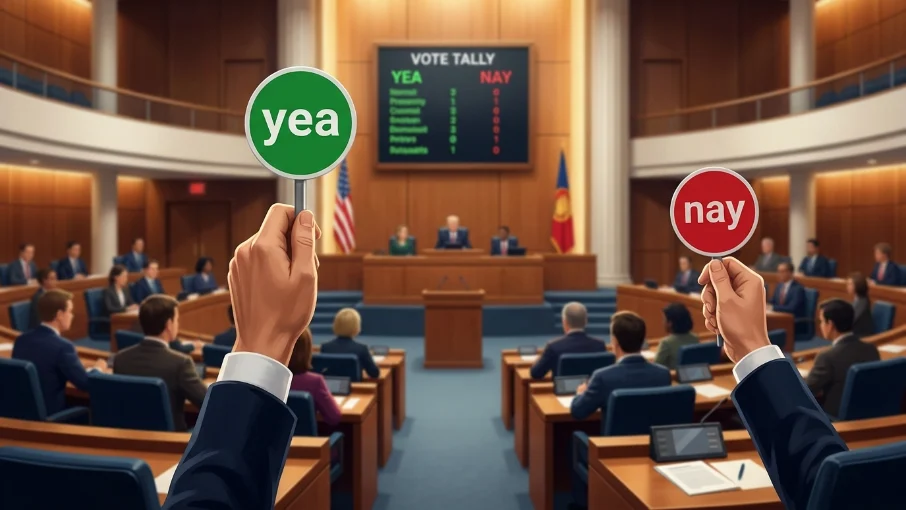
Yea means yes, especially in formal, traditional, or voting contexts, while nay means no or opposition. For example, “All those in favor, say yea” and “The proposal received more nays than yeas.
The words yea and nay are often used to express agreement and disagreement, but they can be confusing because yea is sometimes mistaken for the informal spelling yeah. Yea traditionally means “yes” or indicates approval, especially in formal voting or parliamentary contexts, while nay means “no” or expresses opposition. For example, “The members voted yea” means they approved the proposal.
Understanding the difference between yea or nay is useful when reading formal documents, historical texts, or discussions about voting and decision-making. Although these words may sound old-fashioned in everyday English, they are still used in specific contexts. In this guide, we’ll explore their meanings, differences, pronunciation, and correct usage with clear examples.
Here’s a quick comparison to help you remember:
| Term | Meaning | Part of Speech | Pronunciation | Usage Context |
| Yea | Yes / affirmative vote | Adverb or noun | /yeɪ/ (rhymes with day) | Formal voting, legislative proceedings, parliamentary procedure |
| Nay | No / negative vote | Adverb or noun | /neɪ/ (rhymes with way) | Formal voting, legislative proceedings, expressing denial or refusal |
Mini Recap: Yea means yes, and nay means no. They’re formal voting terms, not everyday casual language. The correct pairing is “yea or nay,” and they’re most commonly encountered in legislative bodies where official votes are recorded.
Is Yea vs Nay a Grammar, Vocabulary, or Usage Issue?
This question sits at the intersection of vocabulary and usage. Technically, knowing the difference between yea and nay is about vocabulary since they’re distinct words with specific meanings. However, their appropriate application depends entirely on context, which makes it a usage issue as well.
Formal vs Informal Usage
In formal settings like government proceedings, courtrooms, and parliamentary debates, yea and nay are the standard terms for recording votes. The U.S. Constitution actually references “yeas and nays” in Article 1, Section 5, requiring that congressional votes be recorded this way when requested . The House of Representatives uses “yea” and “nay” for roll call votes, while the British House of Commons uses “aye” and “no” for the same purpose .
In casual conversation, however, these terms would sound oddly out of place. If someone asked you “yea or nay” about getting coffee, they’re likely being playful or ironic. The natural response would be “yeah” or “sure” rather than “yea.” Native speakers rarely use “yea” or “nay” in everyday speech unless they’re deliberately invoking a formal or old fashioned tone .
Academic Context
In academic writing, particularly in political science, law, or history, you’ll encounter yea and nay when discussing legislative processes, historical voting records, or parliamentary procedure. Using the terms correctly demonstrates understanding of these formal systems. However, in general academic essays or research papers outside these specific fields, you would typically use “yes” and “no” instead.
Casual Usage
When these terms appear in informal contexts, it’s usually for effect. Someone might ask “yea or nay” about a decision to add a touch of humor or formality to the question. As one language expert noted, “using ‘yea or nay’ kind of made it more of a fun way to say it” when asking a casual question .
Practical Usage of Yea
Let’s explore how to use yea correctly in different contexts.
Workplace Example
In a corporate boardroom, the chairperson might call for a vote on a new strategic initiative. They would ask board members to indicate their vote by saying “yea” for approval or “nay” for opposition. The secretary would then record these votes, noting the final tally as something like “12 yeas and 3 nays” . This formal voting procedure ensures accountability, especially when decisions affect shareholders or stakeholders.
Academic Example
A political science professor teaching about congressional procedure would explain that the “yeas and nays” are a constitutionally mandated method for recording how each representative votes on legislation. The 2017 vote on the Tax Cuts and Jobs Act, for instance, had 227 yeas and 205 nays in the House of Representatives . Students studying American government need to understand these terms to grasp how legislative accountability works.
Technology Example
In modern online voting systems or blockchain based governance platforms, you might see “yea” and “nay” used as voting options. These platforms often model themselves after traditional parliamentary procedures to lend legitimacy to their decision making processes. Some collaborative software tools use “yea or nay” buttons for team decisions, giving a formal feel to what would otherwise be a casual poll.
Usage Recap for Yea: Use yea when casting an affirmative vote in a formal setting or when referencing such votes. It’s appropriate in legislative contexts, parliamentary procedure discussions, and formal organizational voting. In everyday conversation, opt for “yes” or “yeah” instead.
Practical Usage of Nay
Nay serves as the negative counterpart to yea.
Workplace Example
During a labor union vote on a proposed contract, members who disagree with the terms would vote nay. The tally might show that the motion failed with 45 yeas and 55 nays. This recorded vote holds union leaders accountable to their members and creates a clear public record of how each representative voted .
Academic Example
When studying the ratification of constitutional amendments, students might examine how many representatives voted nay. For example, the 26th Amendment, which lowered the voting age to 18, passed overwhelmingly, but some representatives still voted nay. Understanding why someone would vote nay requires analyzing their political position, constituent concerns, or ideological objections.
Technology Example
In online parliamentary simulations or educational platforms that teach civics, users might be asked to vote yea or nay on mock legislation. These systems often include the option to change your vote until the voting period closes, but once the final tally is recorded, the yeas and nays become part of the official record for that session.
Usage Recap for Nay: Nay is the formal negative vote in legislative and organizational settings. It’s also used in the phrase “nay, rather” as a way to correct or clarify something just said, though this usage is rare in modern English. In most everyday situations, “no” is the appropriate choice.
When You Should NOT Use Yea or Nay
Despite their clear meanings, yea and nay are frequently misused. Here are common scenarios where you should avoid them:
- Casual yes/no questions When asking a friend if they want pizza, say “yes or no?” not “yea or nay?” The latter sounds unnecessarily formal or joking.
- Expressing excitement Don’t use “yea” when you mean “yay.” They’re homophones but have completely different meanings. “Yay” expresses joy or triumph, while “yea” means yes .
- Informal affirmative responses When someone asks “Did you finish the report?” reply “yeah” or “yes,” not “yea.”
- Pronouncing nay like “nee” Nay is pronounced to rhyme with “say,” not like “knee.” The misspelling “nea” often comes from this pronunciation confusion.
- Writing the phrase as “yea or nea” This is the most common error. The correct spelling is “yea or nay.” Remember that “nay” rhymes with “day” and “way .
- Using nay as an everyday no In normal conversation, saying “nay” instead of “no” sounds archaic. Reserve it for formal voting contexts.
- Confusing yea with yeah These are different words. “Yeah” is an informal pronunciation of “yes,” while “yea” is formal. They serve different purposes.
- Using yea and nay in written dialogue Unless your character is a legislator or you’re deliberately creating an old fashioned effect, use “yes” and “no” in dialogue.
Common Mistakes and Decision Rules
Here’s a table showing common errors and how to correct them:
| Correct Sentence | Incorrect Sentence | Explanation |
| “The senator voted yea on the bill.” | “The senator voted yeah on the bill.” | “Yeah” is informal and not used in official voting contexts |
| “Please give me a yea or nay on this proposal.” | “Please give me a yea or nea on this proposal.” | “Nea” is a misspelling; the correct term is “nay” |
| “The yeas have it, 78 to 62.” | “The yays have it, 78 to 62.” | “Yays” is not the plural form used in formal voting |
| “I voted nay on the amendment.” | “I voted neigh on the amendment.” | “Neigh” is the sound a horse makes, not a vote |
| “Yea, though I walk through the valley…” | “Yeah, though I walk through the valley…” | Biblical usage uses “yea” meaning “indeed” or “truly |
Yea and Nay in Modern Technology and AI Tools
The formal voting tradition of yea and nay has found its way into modern technology. Many online voting platforms and collaborative decision tools have adopted these terms to give their systems an air of legitimacy and formality. AI powered meeting assistants now transcribe votes and can automatically tally yeas and nays during virtual board meetings.
Natural language processing systems sometimes struggle with these terms because they’re relatively rare in everyday language. However, modern AI tools have learned to distinguish between “yea” and “yay” based on context, understanding that “yea” appears in formal contexts while “yay” appears in expressions of excitement. Search engines have also improved at recognizing that users searching for “yea or nea” likely mean “yea or nay” and will suggest the correct spelling.
Etymology and Historical Context
Understanding where these words come from helps clarify their proper usage.
Yea comes from the Old English word “gea” or “ge,” which meant “yes” or “so.” It’s related to the German “ja” and shares ancient roots with other Germanic languages’ words for agreement. Originally, English had a four form system for answering questions based on whether the question was phrased positively or negatively. “Yea” and “nay” answered positive questions, while “yes” and “no” answered negative questions. This system persisted through the Middle English period but eventually simplified .
Nay comes from Old Norse “nei” and was influenced by the Old English phrase “ne gea,” meaning “not yes.” This explains its connection to negation while still being distinct from “no.” The word has been used in English since around the 9th century .
The pairing “yea and nay” appears in the U.S. Constitution and remains the official terminology for recorded votes in Congress. The House of Representatives requires that “the yeas and nays of the members of either House on any question shall, at the desire of one fifth of those present, be entered on the journal” .
Related Grammar Confusions You Should Master
- Yea vs Yeah vs Yay Three completely different words with distinct meanings and uses.
- Affect vs Effect A classic grammar confusion that trips up many writers.
- There vs Their vs They’re Homophones that require careful attention.
- Its vs It’s Possessive versus contraction.
- Your vs You’re Another common homophone issue.
- To vs Too vs Two These sound alike but mean different things.
- Then vs Than Time versus comparison.
- Who vs Whom Subject versus object in questions and clauses.
- Fewer vs Less Countable versus uncountable nouns.
- Lay vs Lie Transitive versus intransitive verbs.
Advanced FAQs
1. Is “yea” the same as “yes”?
No. “Yea” is an old-fashioned or formal way to say “yes,” while “yeah” is the casual form of “yes.”
2. Is “ney” a correct spelling?
Usually, no. The standard spelling is “nay,” which means “no” or expresses a negative response.
3. What is the difference between “yea” and “nay”?
“Yea” means yes or indicates approval, while “nay” means no or indicates disapproval.
4. Can I use “yea” in everyday conversation?
You can, but “yes” or “yeah” is much more common in modern English.
5. Is “nay” still used today?
Yes. “Nay” is still used, especially in formal, literary, historical, or voting contexts.
Conclusion
In conclusion, yea and nay are traditional words used to express agreement and disagreement. Yea means “yes” or indicates approval, while nay means “no” or indicates opposition. These words are most commonly associated with formal voting, parliamentary proceedings, and historical or traditional language.
Understanding the difference between yea or nay is simple once you remember that yea represents a positive response and nay represents a negative one. Although they are less common in everyday conversations, both words remain useful in formal voting contexts and can still be found in legal, political, and historical writing.

Neil Gaiman is an American writer who contributes educational content to LingRoya.com. His work focuses on helping readers improve their English with clear, practical and easy to follow guidance.